

 rohit
rohit
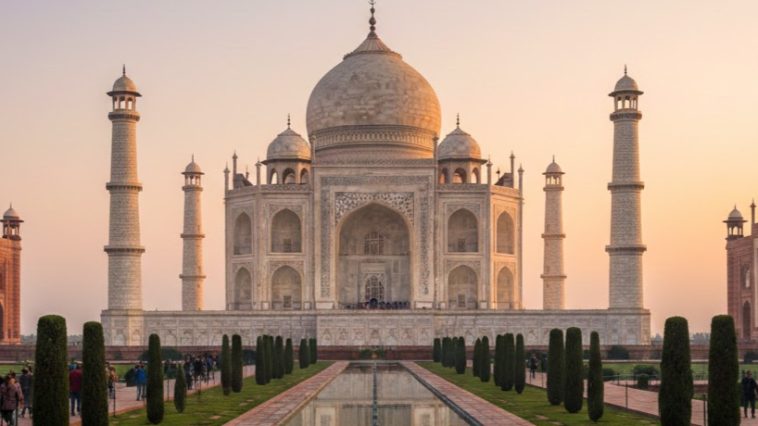
The Taj Mahal is one of the most loved monuments on the planet. Famous for its glowing white marble and perfect symmetry, it stands in Agra as a powerful symbol of love and artistic skill. People travel from every country to see it with their own eyes because photographs cannot capture its real charm. The monument is more than a beautiful structure. It carries deep history, emotion, culture, and craftsmanship. This article explains the complete story of the Taj Mahal in a simple and clear way, including its background, design, meaning, engineering, visitor experience, and its importance in the modern world.
Origin and Historical Background
To understand the Taj Mahal, we must go back to the time of the Mughal Empire. During the rule of Emperor Shah Jahan, the empire was wealthy, strong, and known for grand architecture. His wife, Mumtaz Mahal, was loved by the people and deeply cherished by the emperor. Sadly, she passed away in 1631 while giving birth to their fourteenth child. Shah Jahan was heartbroken and wanted to build a memorial that would keep her memory alive forever.
This dream became the Taj Mahal. Construction began in 1632 and continued for about twenty two years. More than twenty thousand workers and specialists took part in the process. Materials were brought from different parts of India and several other countries. Even centuries later, people admire the dedication and skill that went into building this masterpiece.
Architecture and Design Excellence
The Taj Mahal is a blend of Persian, Islamic, Indian, and Central Asian styles. Every feature of the monument shows balance and harmony.
1. The Main Tomb
The main mausoleum is made of spotless white marble and stands on a large platform. Four minarets stand around it, slightly tilted outward for safety. The dome rises high above the structure and is often compared to a pearl. Inside the central chamber are the symbolic tombs of Shah Jahan and Mumtaz Mahal. The real graves lie below the chamber, following Mughal customs.
2. The Charbagh Garden
The surrounding garden follows the traditional Mughal style known as the Charbagh. It is divided into four equal sections with water channels and pathways. The garden represents the idea of paradise described in Islamic texts.
3. The Reflective Pools
The long pool in front of the structure creates a picture perfect reflection. This view is one of the most iconic images of the Taj Mahal.
4. The Mosque and Guest House
On the west stands a red sandstone mosque used for prayers. On the east stands a similar structure that served as a guest house. Together they create perfect balance in the complex.
5. Calligraphy and Decorative Art
Verses from the Quran are carved on the walls using black marble. The letters increase in size as they go higher to make them look the same from the ground. The walls also contain detailed floral designs made using precious stones through a technique known as pietra dura.
Materials Used in the Taj Mahal
Below is a clear table of the main materials and features used in the Taj Mahal.
Material and Features Table:
| Sr. No. | Material or Feature | Description |
|---|---|---|
| 1 | White Marble | Pure marble from Makrana in Rajasthan used for the main structure |
| 2 | Red Sandstone | Used in the mosque, guest house, and gateways |
| 3 | Precious Stones | Lapis lazuli, turquoise, jade, coral, and others used for inlay work |
| 4 | Black Marble | Used for the elegant calligraphy |
| 5 | Brick and Mortar | Basic support material for the internal structure |
| 6 | Bronze and Metal | Used for doors and decorative screens |
| 7 | Water Channels | Designed to create reflections and keep the area cool |
| 8 | Charbagh Garden | Symbolic garden with four equal sections |
| 9 | Minarets | Built with a slight outward lean for safety |
| 10 | Central Dome | Double dome system for height and acoustic clarity |
Symbolism and Cultural Importance
The Taj Mahal represents many layers of meaning. It is a memorial of love, a symbol of paradise on earth, and a sign of Mughal artistic excellence. Over the years, it has become a cultural icon of India. People around the world associate it with romance, beauty, and timeless devotion.
Writers, artists, filmmakers, and poets often refer to the Taj Mahal as a visual expression of deep emotion. Its symmetry, marble glow, calm gardens, and flowing water create an atmosphere that feels peaceful and almost heavenly.
Myths and Legends
The Taj Mahal has inspired several myths that continue to attract curiosity.
Popular Legends
Many believe Shah Jahan wanted to build a second Taj Mahal in black marble across the river. There is no evidence for this, but the story remains popular. Another famous myth says that workers had their hands cut off so they could never recreate the monument. Historians have found no proof of this either. Some people say the Taj Mahal changes color to show moods, but the color changes simply come from sunlight, atmosphere, and reflections.
Even though many of these stories are not factual, they add an element of wonder to the monument.
Visiting the Taj Mahal: A Complete Tourism Experience
A visit to the Taj Mahal is an unforgettable moment for most travelers. The first view of the structure often leaves visitors speechless.
1. Best Time to Visit
The best months are October to March when the weather is pleasant.
2. The Entrance Gates
The main entrance, known as the Great Gate, prepares visitors for the stunning view inside the complex.
3. Sunrise and Sunset Views
Sunrise gives the Taj Mahal a soft golden tone. Sunset adds warm colors. Night viewing during a full moon creates a magical glow.
4. Tickets and Regulations
To protect the monument, strict rules are followed. Items like plastic, food, drones, and large bags are restricted.
5. Local Attractions
Nearby places like Agra Fort, Mehtab Bagh, and Fatehpur Sikri make the trip even more interesting.
Role of Mughal Technology and Engineering
The Taj Mahal is a brilliant example of Mughal engineering. Workers used simple yet effective tools and methods.
- Large brick scaffolding supported the structure during construction.
- Pulleys and ropes helped lift marble blocks.
- Oxen powered machinery for transporting heavy materials.
- A smart foundation system using stone filled wells was designed to keep the monument stable near the river.
The level of accuracy achieved with basic equipment still surprises modern engineers.
Environmental Threats and Preservation Efforts
Pollution, dust, and changing weather pose threats to the Taj Mahal. Marble can react to the environment, which makes conservation a constant challenge.
Preservation Steps
- The Taj Trapezium Zone was created to reduce industrial pollution.
- Vehicles are restricted near the monument.
- Mud pack treatments are used to clean and restore the marble.
- Air quality is frequently monitored.
- Efforts continue to protect the Yamuna River flowing behind the structure.
These actions help protect the monument for future generations.
Global Recognition and World Heritage Status
In 1983, UNESCO declared the Taj Mahal a World Heritage Site. It is often listed among the modern wonders of the world. Leaders, celebrities, historians, and millions of travelers visit every year to admire its beauty and feel its peaceful presence.
Economic Impact
The Taj Mahal brings significant economic benefit to the surrounding region. It supports jobs related to tourism, hotels, local transport, handicrafts, and guide services. Many artisans in Agra specialise in marble inlay work inspired by the Taj Mahal. This keeps traditional skills alive while providing income for families.
FAQs – (Frequently Asked Questions)
Q1. Who built the Taj Mahal and what was the reason?
Shah Jahan built it in memory of his wife Mumtaz Mahal after she passed away in 1631.
Q2. How long did the construction take?
It took nearly twenty two years to complete, from 1632 to 1653.
Q3. Which materials were used for the monument?
White marble, sandstone, bricks, precious stones, and black marble were the main materials.
Q4. Why does the structure appear to change color?
The color changes because of sunlight, moonlight, and atmospheric reflections on the marble.
Q5. Are visitors allowed inside the main chamber?
Yes, visitors can enter the chamber, but the real graves are in a lower area not open to the public.
Q6. Can tourists view the Taj Mahal at night?
Night viewing is allowed on full moon nights and two days before and after, except on Fridays.
Q7. What is the ideal season to visit?
October to March is the best time because the weather is comfortable.
Q8. Is the black Taj Mahal story true?
There is no reliable historical evidence. It is mainly a popular legend.
Q9. Why are the minarets slightly tilted outward?
They were designed that way to protect the main tomb if an earthquake occurred.
Q10. Why is the Taj Mahal considered a symbol of love?
Because it was built by a grieving emperor to honor his wife, representing eternal affection.
You Might Also Love This:
- Marina Bay Sands: A Complete Story of Innovation, Architecture, and Modern Luxury
- Petronas Twin Towers: History, Architecture, Facts, and Global Legacy
Conclusion:
The Taj Mahal continues to inspire people from every corner of the world. Its design, story, and craftsmanship make it one of the greatest human creations. It is more than a monument. It is a reminder of love, beauty, and skill. Visitors feel a sense of peace and admiration when they stand before it, whether it is during sunrise, sunset, or under the moonlit sky. The Taj Mahal remains a true treasure of India and a shining symbol of timeless elegance.
