

 rohit
rohit
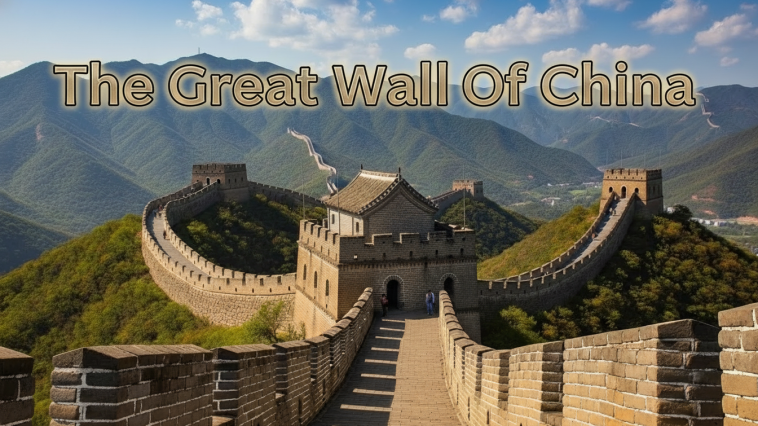
The Great Wall of China is one of the most remarkable structures ever created by human hands. Stretching across vast mountains, dry deserts, and open plains, it is not just a single wall but a massive defensive system built over many centuries. More than a historical monument, the Great Wall represents human determination, smart planning, and architectural strength on a scale rarely seen anywhere in the world.
For designers, architects, historians, and curious readers, the Great Wall offers timeless lessons. It shows how structures can adapt to nature, how local materials can be used wisely, and how long term thinking can shape history. Even today, its design principles continue to influence modern infrastructure and large scale architectural projects.
Historical background of the Great Wall of China
The story of the Great Wall did not begin with one ruler or one plan. Its origins go back thousands of years, long before China became a unified nation.
1. Early beginnings
As early as the 7th century BC, different Chinese states such as Qi, Yan, and Zhao built walls around their territories. These early walls were made using rammed earth and stone and were built mainly for local protection. They were separate structures, not connected to one another.
These early fortifications laid the groundwork for what would later become the Great Wall. They showed that walls could be effective in slowing down enemy movement and protecting borders.
2. Qin Dynasty and unification
A major turning point came in 221 BC when Qin Shi Huang unified China and became its first emperor. To protect the northern borders from nomadic invasions, he ordered the connection of existing walls into a single defensive system.
This was the first time the idea of a continuous Great Wall took shape. Although these sections were mostly built from earth and were not as strong as later versions, they played an important role in shaping the future wall.
3. Han Dynasty expansion
During the Han Dynasty, the Great Wall was extended further west. This expansion helped protect important trade routes that later became part of the Silk Road.
At this stage, the wall served multiple purposes. It was used for defense, border control, trade monitoring, and communication. Soldiers stationed along the wall helped regulate movement in and out of the empire.
4. Ming Dynasty reconstruction
The most famous and well preserved sections of the Great Wall today were built during the Ming Dynasty. Faced with frequent invasions, Ming rulers invested heavily in rebuilding the wall using brick and stone.
These sections were taller, stronger, and more organized. They included advanced defensive features such as battlements, watchtowers, and drainage systems. The Ming Dynasty transformed the Great Wall into a long lasting military structure.
Architect and builders of the Great Wall of China
1. No single architect
The Great Wall of China does not have one architect. It was not designed by a single person or created from one master plan.
In ancient China, the role of a modern architect did not exist. The wall evolved slowly over centuries, shaped by military needs, geography, and available materials. Each dynasty made changes based on its own challenges and resources.
2. Role of emperors and imperial authority
Chinese emperors played an important role by ordering construction and approving resources. They decided when and where sections of the wall should be built or repaired.
Qin Shi Huang is often incorrectly described as the architect of the Great Wall. In reality, he only ordered the connection of existing walls. The actual planning and design were handled by engineers and military officials.
3. Military engineers and planners
The true designers of the Great Wall were military engineers and strategists. Their responsibilities included:
- Selecting strategic routes based on natural terrain
- Designing watchtowers and fortresses
- Creating communication systems using smoke and fire signals
- Adapting construction methods to mountains, deserts, and plains
Their main focus was strength, defense efficiency, and durability rather than decoration.
4. Labor force and craftsmanship
The Great Wall was built by a massive labor force that included soldiers, farmers, prisoners, and skilled craftsmen. Working conditions were extremely harsh, and many workers lost their lives due to exhaustion and accidents.
Despite limited tools and technology, these builders showed remarkable skill. Their craftsmanship helped create structures that have survived for centuries.
Architecture and construction techniques
From an architectural point of view, the Great Wall is a powerful example of adaptive design. Its form changes depending on location, purpose, and time period.
a) Materials used in Construction
Construction materials varied by region:
- Rammed earth was used in deserts and flat plains
- Stone was used in mountainous areas
- Brick was widely used during the Ming Dynasty
Builders often used materials found nearby, which reduced transportation effort and helped the wall blend naturally into its surroundings.
b) Structural design
The Great Wall includes several key architectural elements:
- Defensive walls
- Watchtowers placed at regular intervals
- Fortresses at important locations
- Beacon towers for communication
The height and thickness of the wall changed based on terrain and threat level, showing a flexible and practical design approach.
c) Engineering brilliance
One of the most impressive aspects of the Great Wall is how it follows the natural shape of the land. Instead of cutting through mountains, the wall climbs over them.
This reduced construction difficulty and made the wall harder for enemies to cross. It also shows an early understanding of landscape based architecture.
Symbolism and cultural meaning
Over time, the Great Wall became more than a defensive structure. It grew into a powerful symbol of protection, unity, and national identity.
In Chinese culture, the wall represents perseverance and collective effort. It has inspired countless poems, artworks, and stories, becoming a lasting symbol of human strength and resilience.
Influence on modern architecture and design
Even today, the Great Wall continues to inspire architects and designers around the world.
Key lessons include:
- Planning large scale infrastructure with long term vision
- Using local materials for sustainable construction
- Designing structures that work with nature
- Building systems that can expand and adapt over time
- Focusing on durability rather than short term appearance
Global recognition and preservation
The Great Wall of China is a UNESCO World Heritage Site and one of the most visited landmarks in the world. Millions of people visit it every year.
However, many sections are damaged due to erosion, pollution, and human activity. Preservation efforts focus on protecting original materials while allowing responsible tourism.
Quick Key facts about the Great Wall of China
| Sr. No. | Aspect | Details |
|---|---|---|
| 1 | Total length | Over 21,000 kilometers including walls, trenches, and natural barriers |
| 2 | Construction period | Built from the 7th century BC to the 17th century |
| 3 | Main dynasties involved | Qin, Han, Northern Wei, Sui, and Ming Dynasties |
| 4 | Primary purpose | Defense against invasions and border control |
| 5 | Secondary purposes | Trade regulation, migration control, and communication |
| 6 | Construction materials | Rammed earth, stone, brick, wood, and lime mortar |
| 7 | Most preserved sections | Ming Dynasty walls near Beijing |
| 8 | Architectural style | Military and defensive architecture |
| 9 | Average height | Around 6 to 8 meters, varying by region |
| 10 | Average width | Approximately 4 to 5 meters at the top |
| 11 | Watchtowers | Built every few hundred meters for surveillance |
| 12 | Beacon towers | Used smoke by day and fire by night for signaling |
| 13 | Labor force | Soldiers, farmers, prisoners, and skilled craftsmen |
| 14 | Estimated workers | Millions over centuries |
| 15 | Strategic design | Built along mountains, ridges, and natural barriers |
| 16 | Military function | Defense, troop movement, and supply transport |
| 17 | Cultural significance | Symbol of perseverance and national identity |
| 18 | UNESCO status | Declared a World Heritage Site in 1987 |
| 19 | Tourism importance | One of the most visited landmarks in the world |
| 20 | Modern challenges | Erosion, weather damage, and human activity |
FAQs – (Frequently Asked Questions)
Q1. Who designed the Great Wall of China?
There was no single designer. The wall was created by multiple dynasties with the help of military engineers.
Q2. Why was the Great Wall built?
It was built to protect Chinese territories from invasions and to control borders and trade routes.
Q3. Which dynasty built the strongest sections?
The Ming Dynasty built the most durable and recognizable sections.
Q4. What materials were used in construction?
Builders used rammed earth, stone, and brick depending on location.
Q5. Is the Great Wall visible from space?
It is not easily visible from space without special equipment.
Q6. How long did it take to build the Great Wall?
Construction took place over more than two thousand years.
Q7. Why is the Great Wall important today?
It represents historical innovation, cultural identity, and architectural endurance.
You Might Also Like This:
- World Trade Center: History, Architecture, and Symbol of Resilience
- Himeji Castle: History, Architecture, and Cultural Significance
Conclusion:
The Great Wall of China is not just an ancient defense system. It is a living record of human intelligence, cooperation, and long term thinking. Built by generations of people, it shows how architecture can serve both practical needs and cultural meaning.
By adapting to nature instead of fighting it, the Great Wall proves that great design is about purpose, context, and durability. Even after centuries, it continues to stand as one of the greatest architectural achievements in human history.
